Rest in peace, Mocha and Willie (but not you, Kato—you're not dead yet...)


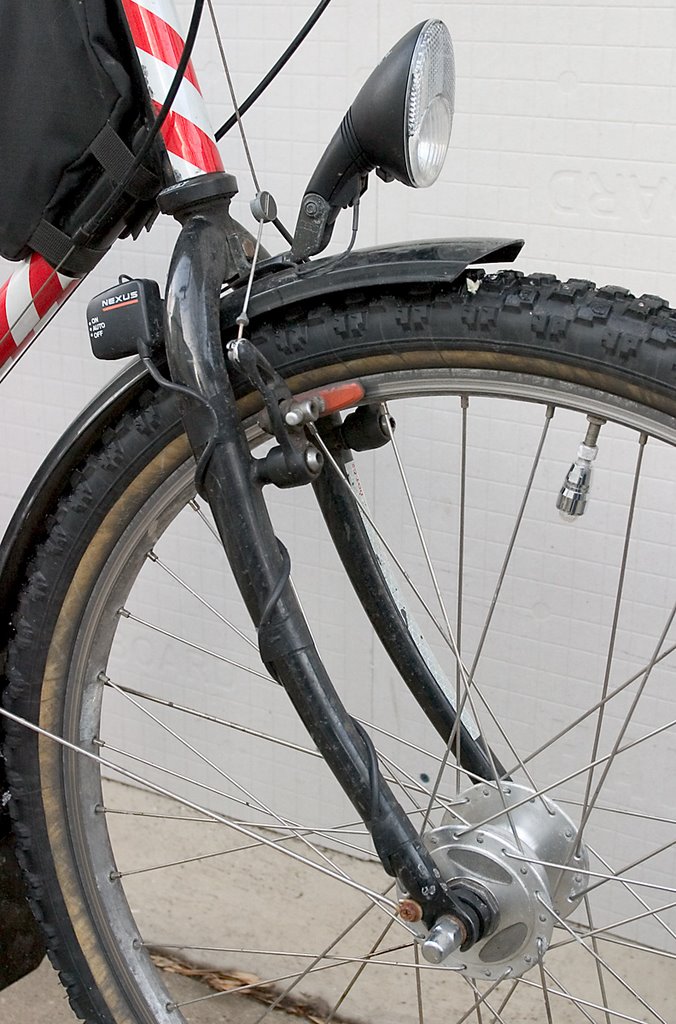
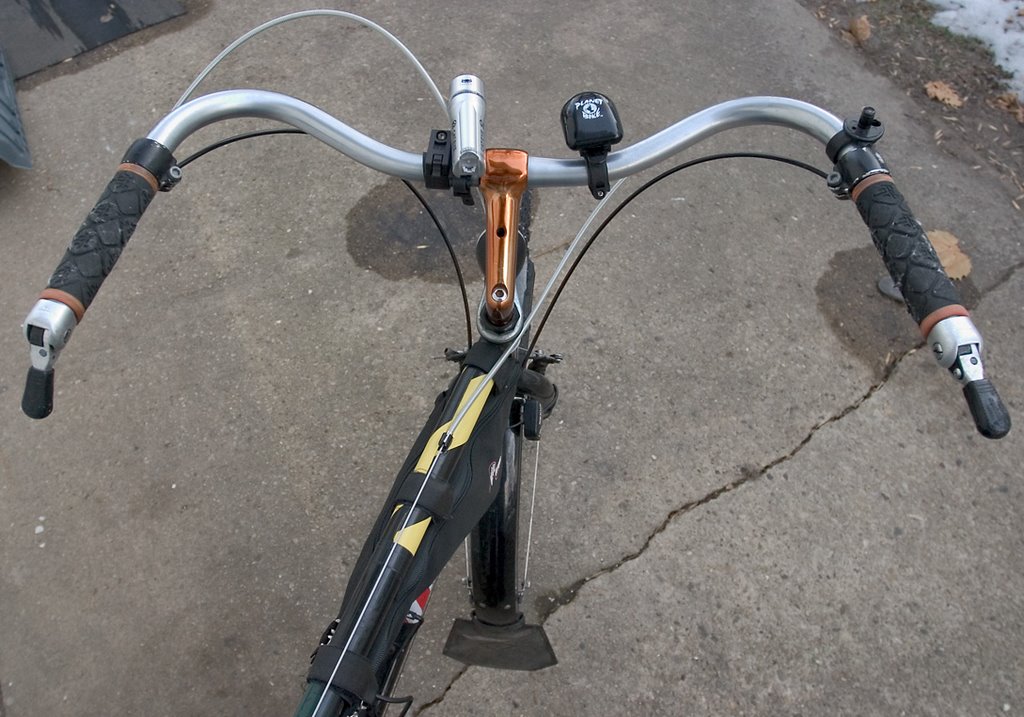


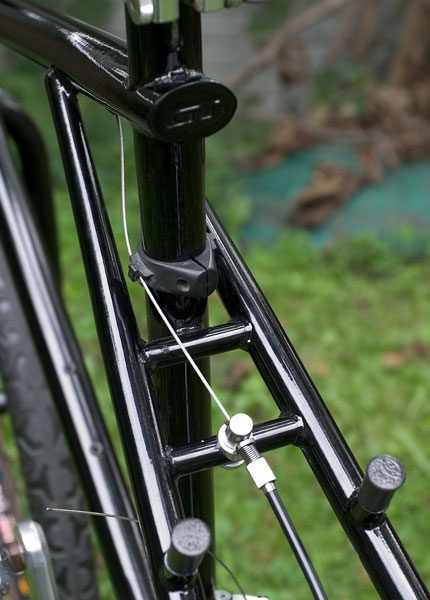
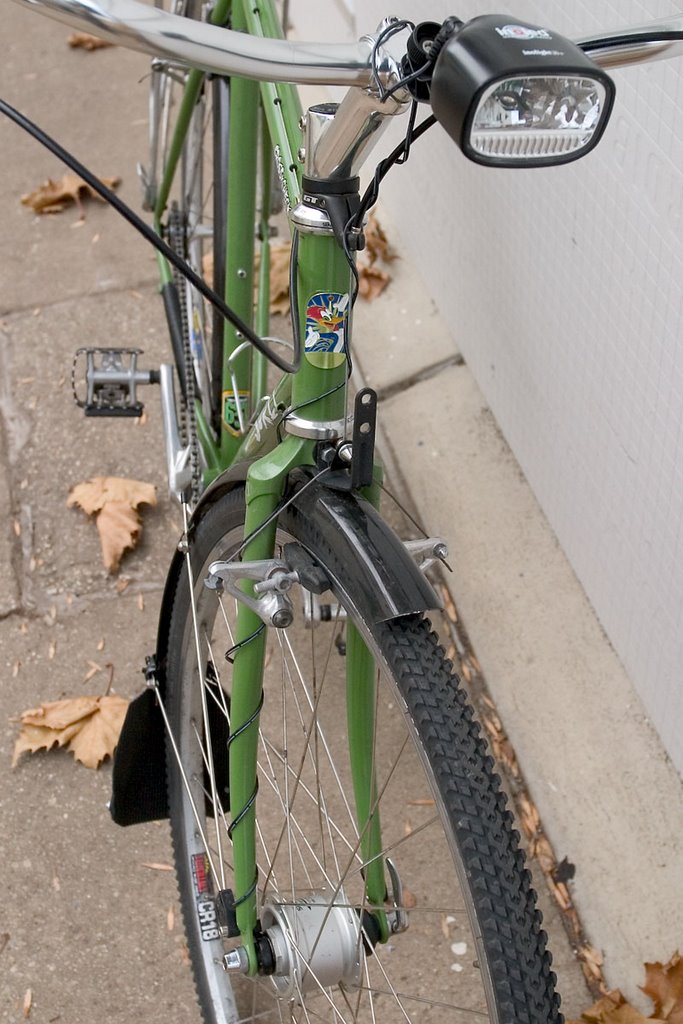
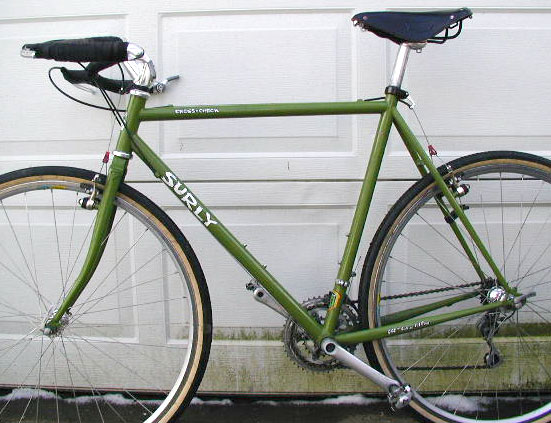
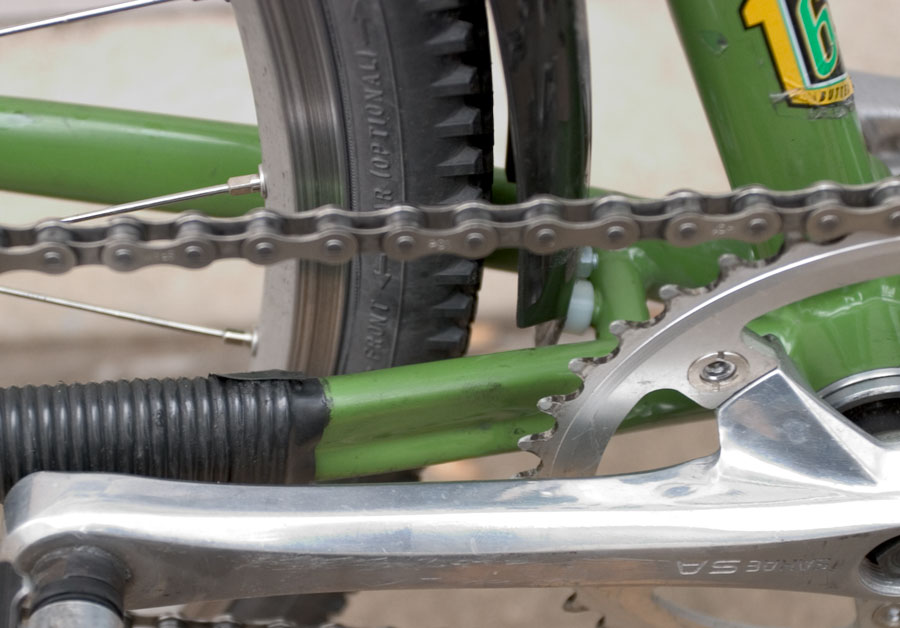
We currently have one single sample for us to testride and I just got done with my three weeks of testing on it. Here are the results, mainly in comparison to my Instigator frame with the Xtracycle Free Radical bolt-on.
During city commutes with a normal load, the bike is noticeably quicker and more nimble in handling. It's about 1 1/2 pounds lighter just in the frame and fork, yet it's torsionally stiffer and does not fishtail like the Insti/FreeRad. The nice vertical compliance that is inherent in long frames is still there, but it has lessened a bit. With the slight bouncing feeling I got when I'd hit small bumps on my Insti/FreeRad virtually eliminated, it rides much more like a normal bike.
One day I loaded it down with two 5-gallon kegs of beer, a soundsystem and another 40 pounds of stuff. All total the load was about 200 pounds in addition to myself, right around the intended weight limit. This size load would've truly kicked my butt on the Insti/FreeRad, but on the Big Dummy I was able to ride it like a bike without the load dominating my every move. My lower back wasn't forced to sit on the seat to stabilize the load the whole day and I ended up putting about 30 miles on it, both on and off road. Sure, my legs were cooked, but it was nice to know was the Dummy was capable of whatever I was capable of.
Day by day I found myself more comfortable with the geometry and was darting through traffic without having to manhandle it. I never once thought I was at a disadvantage in tight situations while at speed. I even ripped a small section of singletrack much faster on the Dummy than the Insti/FreeRad, proving the off road capabilities are improved. Seriously folks, getting a long-wheelbased bike through a corner and occasionally getting a two-wheel drift is a total blast. Imagine having the your weight loaded equally on both front and back wheels without the real threat of endo-ing, and you'll get yourself going faster than you'd ever think you could go.
Overall, I'm extremely happy so far with this preliminary version of the Big Dummy. We still have some things to tweak and more prototypes coming to test this winter, but the results will only get better.



Dictionary definitions aside, the common connotation of the term accident is something that was unavoidable, unplanned, unpredictable, unpreventable, etc. In common usage, the term accident implies that no one was responsible for what happened. Most traffic crashes, however, are both predictable and preventable.
[...]
Calling these incidents crashes or collisions allows us to get away from the blamelessness that the term accident implies, and get on with the task of addressing the human behaviors that lead to these occurrences on a predictable basis so that they can be prevented.
Wisconsin DOT statistics indicate that something on the order of 80% + of reported traffic accidents are caused by driver error. In the 1989 edition of Wisconsin Traffic Accident Facts, at the bottom of page 1, is the following:Accidents to be called Crashes
Traffic crashes are not accidents, but avoidable events caused by a single variable or chain of variables. We are dedicated to reducing traffic injuries and fatalities by addressing the factors that cause them. During this transition year, the 1989 edition of Accident FACTS uses the term "accident." Future editions will incorporate "crash" into the text and will be entitled Crash FACTS.
[The Public Information Officer] of the East Police Precinct called me early this morning to report on a motorcycle-van crash which occurred at about 9:30 pm Friday night at the corner of Atwood and Jackson streets. The crash resulted in the death of the motorcyclist and critical injury to the van driver. As of this morning, the van driver, a woman, was in critical condition.
Police spotted 3 motorcyclists driving west on E. Washington Avenue at 100 MPH. Police gave chase, and two of the motorcyclists pulled over. The third continued at a high rate of speed toward the downtown. Near downtown, another squad began the chase, and the motorcyclist turned (I don't know where), got onto Williamson St., and began driving east. The police officer ceased pursuit at about Baldwin.
The motorcyclist continued onto Atwood. Police do not know how the driver collided with the van.
Please stop using the word "accident" to describe "crashes." This is a horrible tragedy, but it wasn't an "accident." It's a clear example of why most crashes are NOT accidents—a motorcyclist evading police and driving at 100 MPH is almost inevitably going to end up crashing. There's nothing unpredictable, and certainly nothing unpreventable, about it.
One of the first steps to changing the culture that seems to think it's normal for drivers to kill more than 40,000 people a year, and seriously injure half a million more, is to change the language. Crashes are not accidents. (OK, it's possible that some tiny percentages of crashes fit the common understanding of the word "accident," but that doesn't mean it's OK to call all of the crashes that are predictable and easily predictable "accidents").
If you don't think that language matters, then consider "defense of marriage" vs. anti-gay legislation, and "Right to Life" vs "Pro Choice." Wherever you stand on those polarizing issues, it is absolutely clear that language matters, and when it comes to CRASHES, the Wisconsin Department of Transportation agrees. [see above]

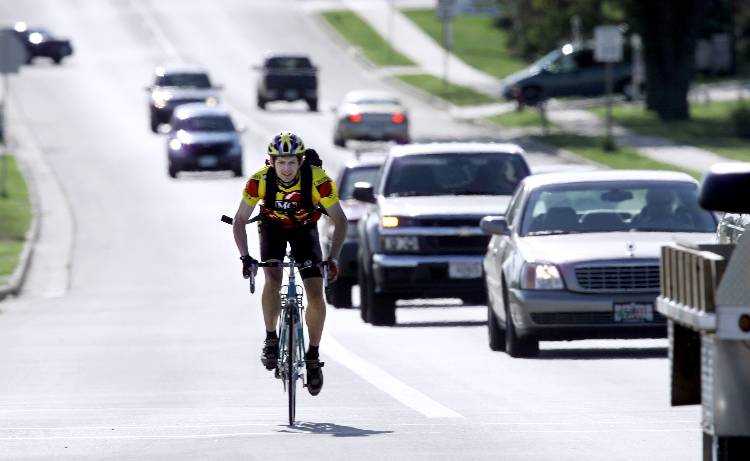
"Many people think I am either stupid, insane, or foolish for riding busy roads to Sun Prairie," said Swartz.Certainly the ideal for any bicycle commuter, but there's more to it:
"This should not be the case. I should have routes to use that would not lead people to that conclusion. . . . We need safe routes to (Sun Prairie) and other destinations for the novice and average rider in all conditions, the temperature, precipitation, light and hour of day."
"Look at it this way," Swartz added, "there is the obesity epidemic, land-use decisions, private property rights, public transportation costs, gasoline prices. They are all integrated. With gas (headed toward) $4 a gallon, people will start thinking twice before they build."I was a little surprised to see those quotes in print...